
Knowledge Wing
The educational layer – where you share insights, methods, and expertise through structured storytelling.
Here: About The Internet House Standard
The architectural method behind AI-fit WordPress.
1. From Templates to Architecture
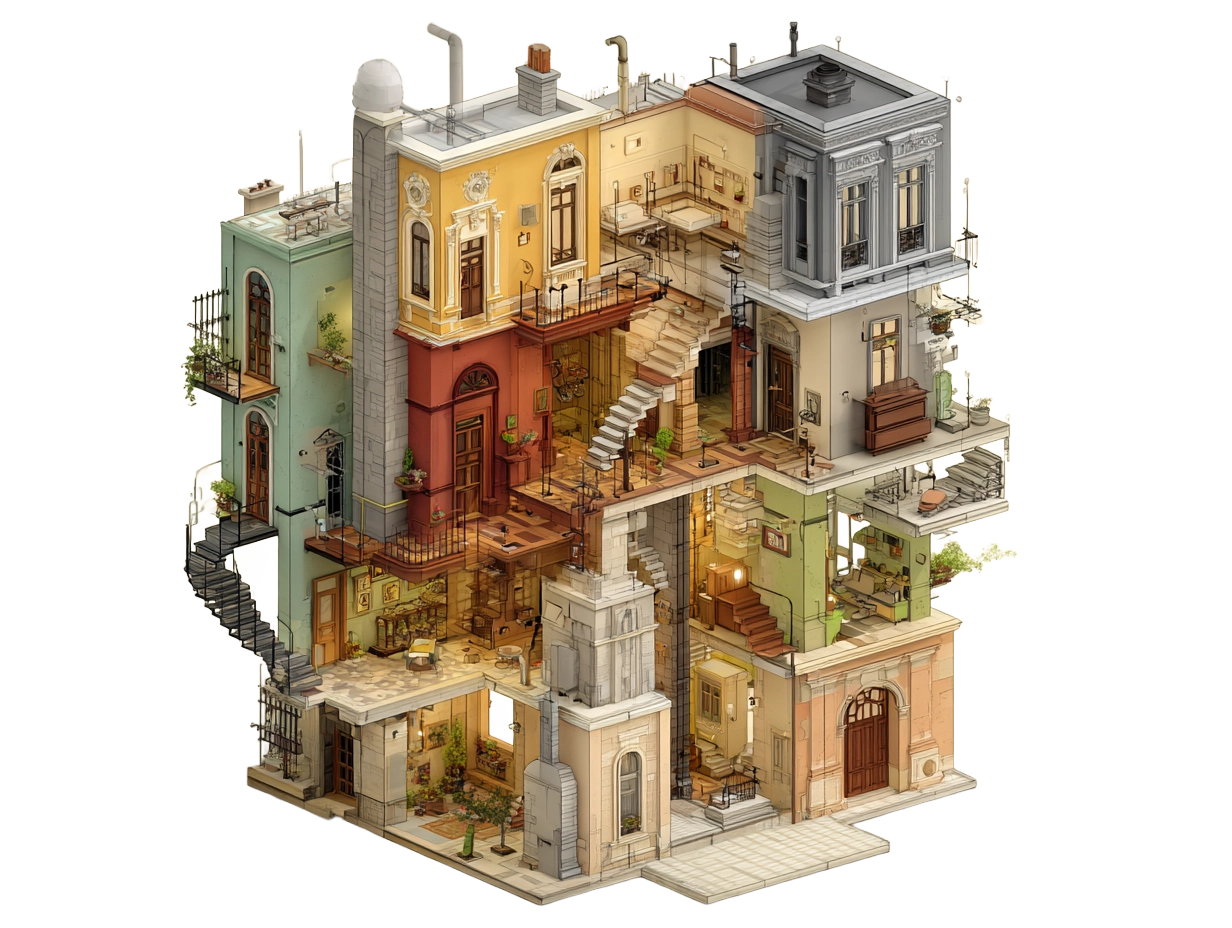
The Internet House Standard is a method for building websites as digital buildings, not visual templates.
Instead of sections and widgets, this framework defines functional rooms — each with a clear purpose, a semantic role, and a machine-readable structure.
While traditional themes focus on appearance, an Internet House focuses on:
- architecture
- meaning
- readability
- consistency
- AI-fit structure
- governance-ready information design
It transforms a website from something that is viewed into something that can be understood.
Instead of thinking in sections and widgets, this model works with functional rooms, where:
- each room has a purpose
- each purpose has a semantic role
- each semantic role can be made readable for both humans and AI
While traditional themes primarily deliver layout, an Internet House delivers:
- architecture
- meaning
- orientation
- governance
- AI-fit structure
It transforms a website from something you look at into something you can understand, evaluate, and reuse.
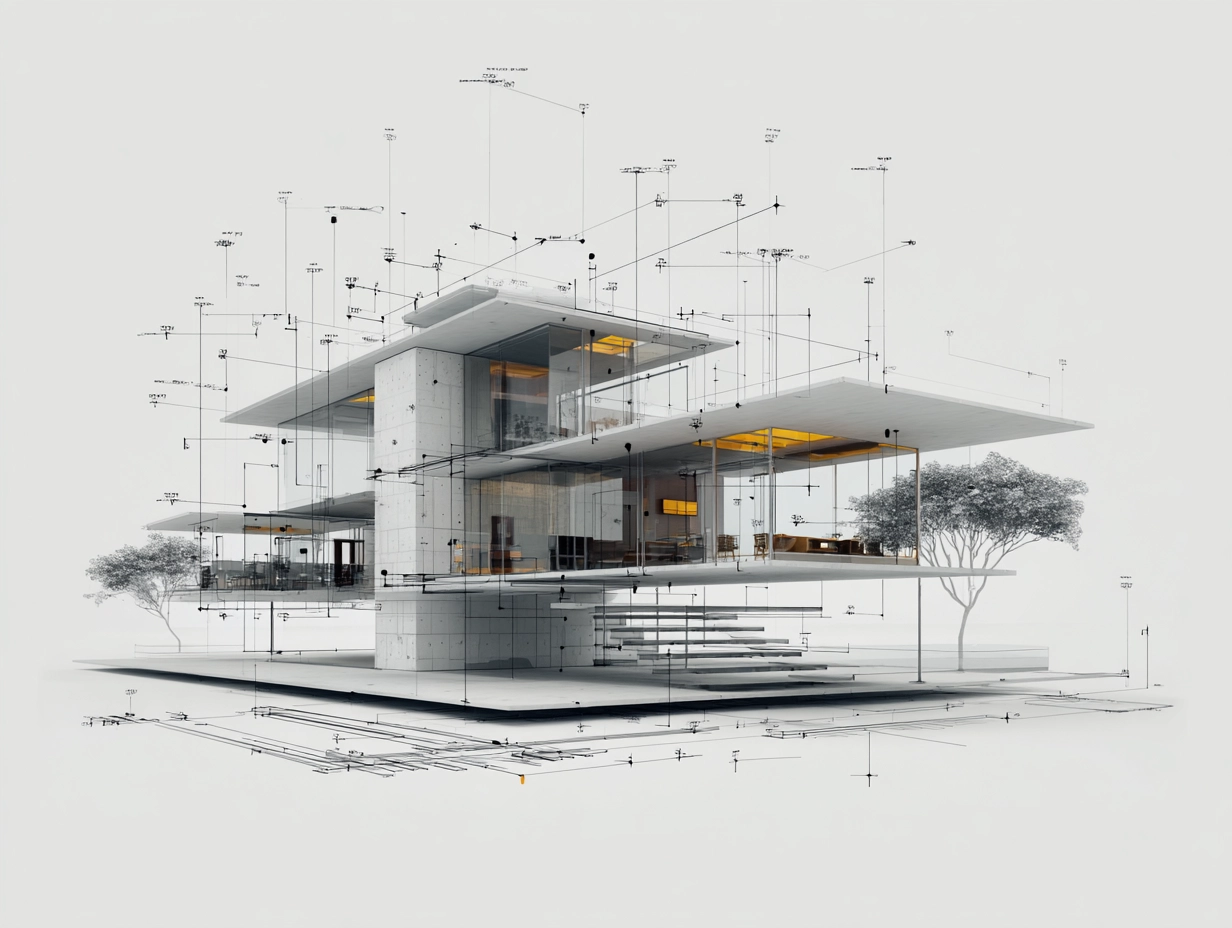
2. The exclusive AI-Fit Semantic Room Architecture™
– 12 Rooms
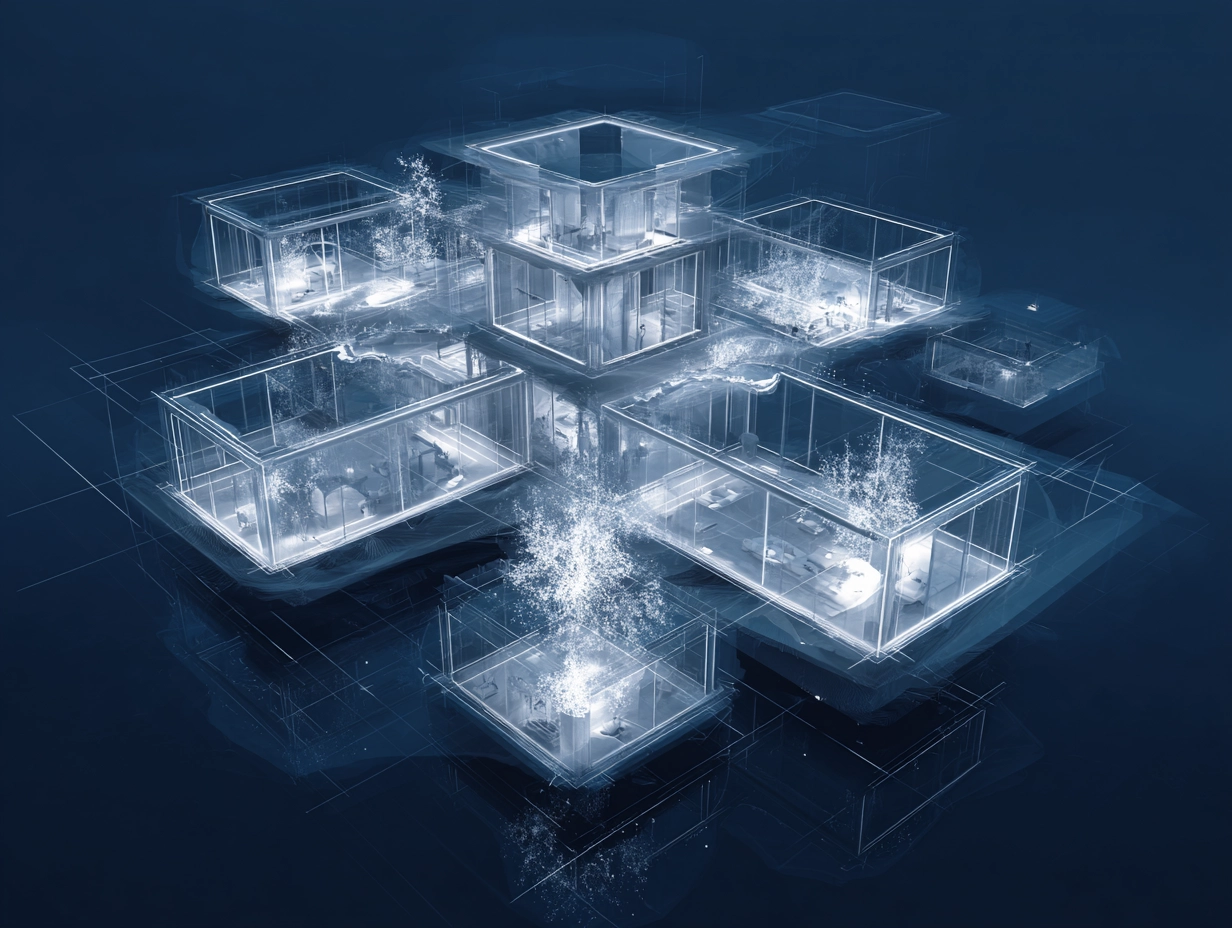
2.1 Orientation & Identity
Reception Hall, Brand Core, Building Plan
Reception Hall
The entrance room.
Here you articulate your claim, mission, and first promise.
For AI: clear signals about the main purpose of the website.
For humans: “What is this place about?”
Brand Core
The room where identity, values, origin story, and strategic positioning become visible.
This is where you anchor your reason to exist — beyond mere offerings.
Building Plan
The architectural overview of the entire Internet House:
Which rooms exist? How are they connected?
For AI: an explicit information architecture, not scattered standalone pages.
2.2 Knowledge & Value
Knowledge Wing, Offer Zone, Trust Chamber
Knowledge Wing
The intellectual and methodological core:
- frameworks
- models
- whitepapers
- definitions
- glossaries
- standards
This room:
provides AI with recurring concepts, terms, and structures
makes your thinking visible
creates citability
Knowledge Wing
Offer Zone
The room that contains your value propositions:
- services
- packages
- programs
- done-with-you / done-for-you models
For AI: a clearly defined zone of value entities (Services, Products, Offers).
Trust Chamber
The trust room:
- references
- case studies
- project examples
- press & recognition
- verifiable results
This is where an explainable trust layer emerges — readable for humans and machines.
2.3 Interaction & Experience
Entertainment Stage, Community Garden, Memory Room
Entertainment Stage
The room for presentation, performance, and creative storytelling:
- talks
- keynotes
- reels
- showcases
- artistic formats
High emotional impact — yet fully embedded in your architecture.
Community Garden
The room for dialogue, co-creation, and exchange:
- community formats
- workshops
- participatory activities
- shared knowledge
For AI: a clearly defined engagement space, instead of scattering everything across a blog.
Memory Room
Your memory and archive room:
- archives
- timelines
- previous projects
- historical notes
It makes development visible instead of hiding or deleting the past.
2.4 Protection & Future
Security Wing, Innovation Lab, Future Port
Security Wing
The room dedicated to safety, responsibility, and compliance:
- data protection
- technical security
- AI governance
- ethical guidelines
For AI: explicit signals that risks are recognized and managed.
Innovation Lab
The experimentation room:
- prototypes
- pilot projects
- experiments
- clearly marked “work in progress”
This prevents raw, unfinished material from diluting the main product areas — essential for clarity and trust.
Future Port
The docking room for forward-looking topics:
- roadmaps
- next versions
- strategic outlooks
- partnerships in development
For AI and decision-makers: a structured understanding of where your architecture is heading.
3. The Semantic Logic
Behind the Internet House
The 12 rooms function not only as a metaphor
— they form a declarative semantic system:
terms like Reception Hall, Knowledge Wing, Security Wing become semantic markers
- each room name is a recurring signal
- each function can be expressed through content, navigation, and optional JSON-LD
- terms like Reception Hall, Knowledge Wing, Security Wing become semantic markers
For AI, this creates:
- a semantic graph
- rooms as nodes
- functions and content as connecting edges
Instead of a “page salad,” AI sees a coherent knowledge structure.

4. Why This Is AI-fit
AI-fit is not “more tech” — it is more clarity:
- clear room names instead of arbitrary page titles
- consistent navigation instead of random menus
- recurring models instead of scattered content
- optional room-level JSON-LD (e.g., Service, Article, CreativeWork, Organization…)
AI-fit is not “more tech” — it is more clarity:
This makes your website:
- easier to analyze
- easier to interpret
- more stable to cite
- more future-proof within AI ecosystems
AI doesn’t just extract data points —
it recognizes a system.

5. Architecture-first,
Theme-agnostic
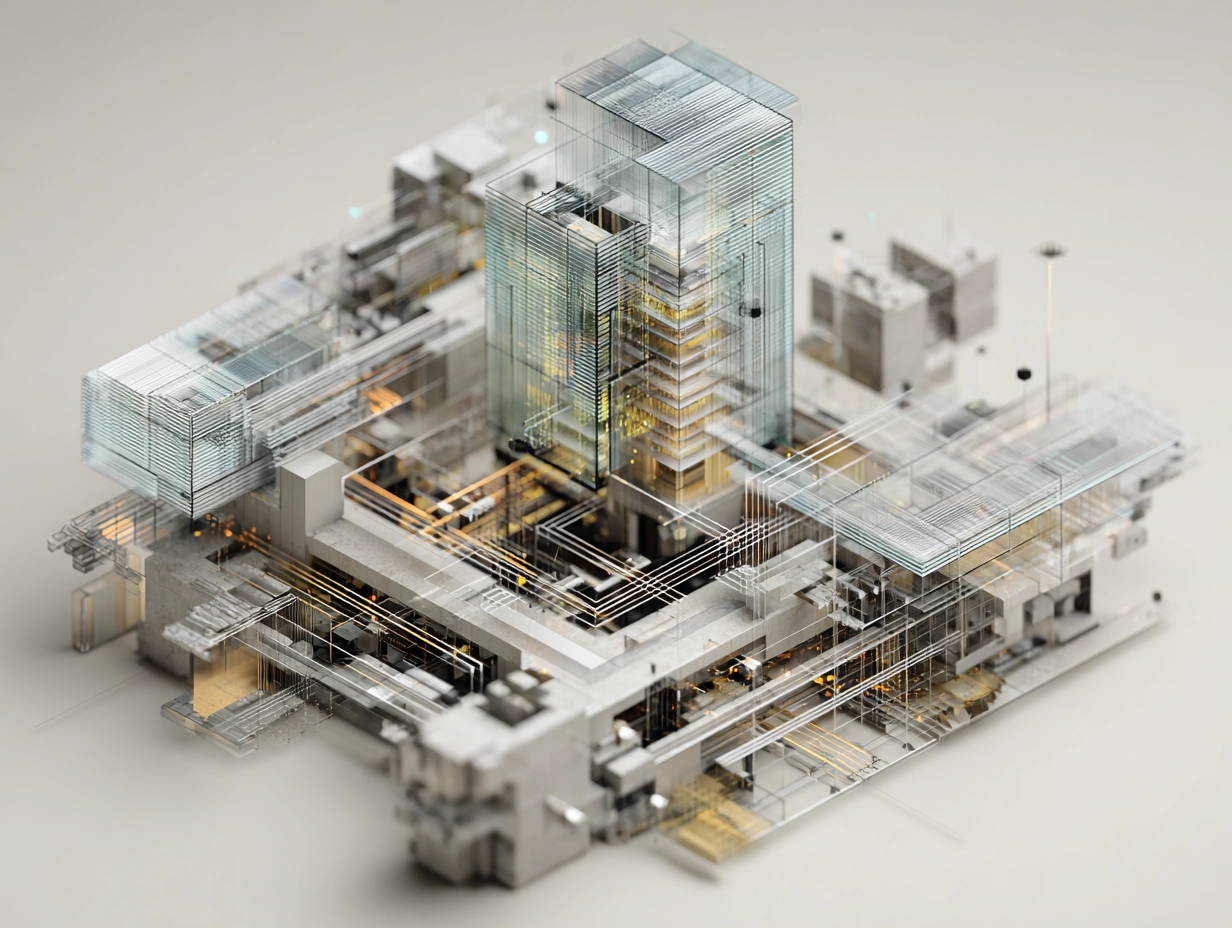
The 12 rooms belong to the architecture, not the theme.
They:
- survive theme changes
- work with Classic, FSE, Headless, Elementor, Gutenberg
- adapt to new frontends without losing semantic structure
An Internet House is a standard, not a skin.
6. Who This Standard Is For
The Internet House Standard is designed for:
- organizations that need more than a pretty website
- teams that integrate AI, governance, and structure
- people who understand architecture as a strategic advantage
- projects with complex content and long life cycles
Not designed for:
- simple one-page “business card” sites
- “just a quick website” requests
- purely decorative online presence with no strategy
Your work is built for people who aim to build digital superiority.
7. Building an Internet House
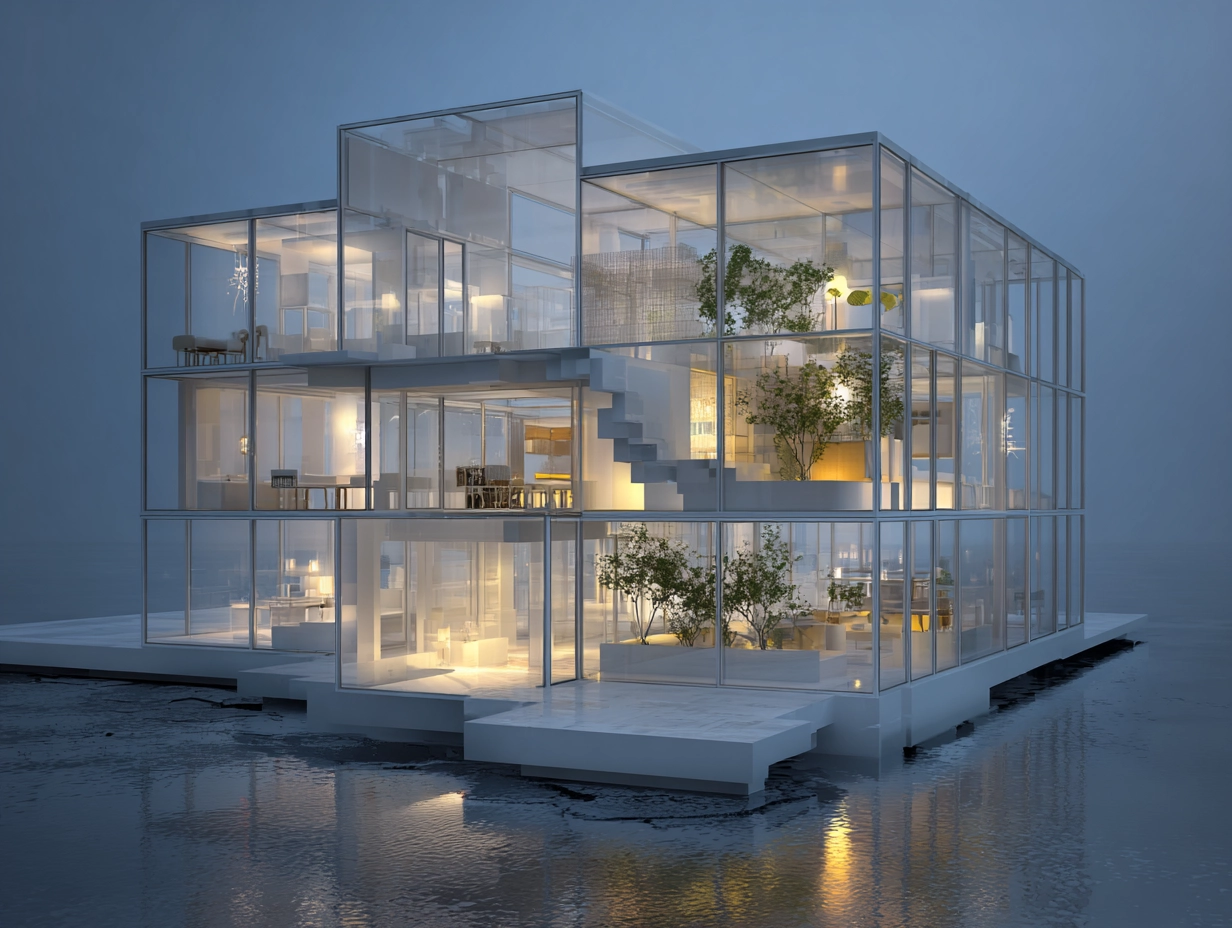
If a website is a building,
then the architecture determines whether humans and AI can navigate it.
The Internet House Standard gives you:
- a language
- a structure
- an architecture
- a governance foundation
- and an AI-fit system built for long-term growth.